

Which investigations are needed to monitor heart health?
Cardiovascular conditions are among the most serious health problems and are the leading cause of death in Romania. There are many causes of heart…
 Medical speciality
Cardiovascular disease is a serious health problem that is often ignored by the general public. Nevertheless, it is the leading cause of death in Romania, with 60% of deaths resulting from cardiovascular disease. Sadly, we rank first in Europe for mortality caused by cardiovascular conditions, which are affecting more and more young people.
Lack of exercise, high cholesterol, smoking and hypertension, as well as psychological conditions such as anxiety or depression, considerably increase the risk of cardiovascular disease. To enjoy good health into old age, the best medicine is prevention, and the Cardiology specialists at Artro Sport Clinic help us not only in this respect but also with the diagnosis and treatment of heart conditions, using medical equipment of Western standards.
An appointment with a cardiologist can spare us many problems that we might not even have anticipated. The Cardiology specialists at Artro Sport Clinic focus on the diagnosis and treatment of heart conditions (congenital, ischaemic, valvular disease, arrhythmias, heart failure or pericardial disorders) so that the disease is cured or kept under control.
Last but not least, our doctors are concerned with the prevention of heart disease. Sudden death, most frequently caused by a heart rhythm disorder (arrhythmia), has led to the tragic end of many elite athletes. These, however, were only the most publicised cases. In reality, sudden death accounts for 20% of overall mortality. It occurs not only in athletes but also in those who engage in intense physical activity without knowing the limits of their body's endurance, especially if they are unaware of suffering from any illness.
At Artro Sport Clinic, tests using the latest international technologies can be carried out to detect and prevent the onset of possible conditions that increase the risk of sudden death.

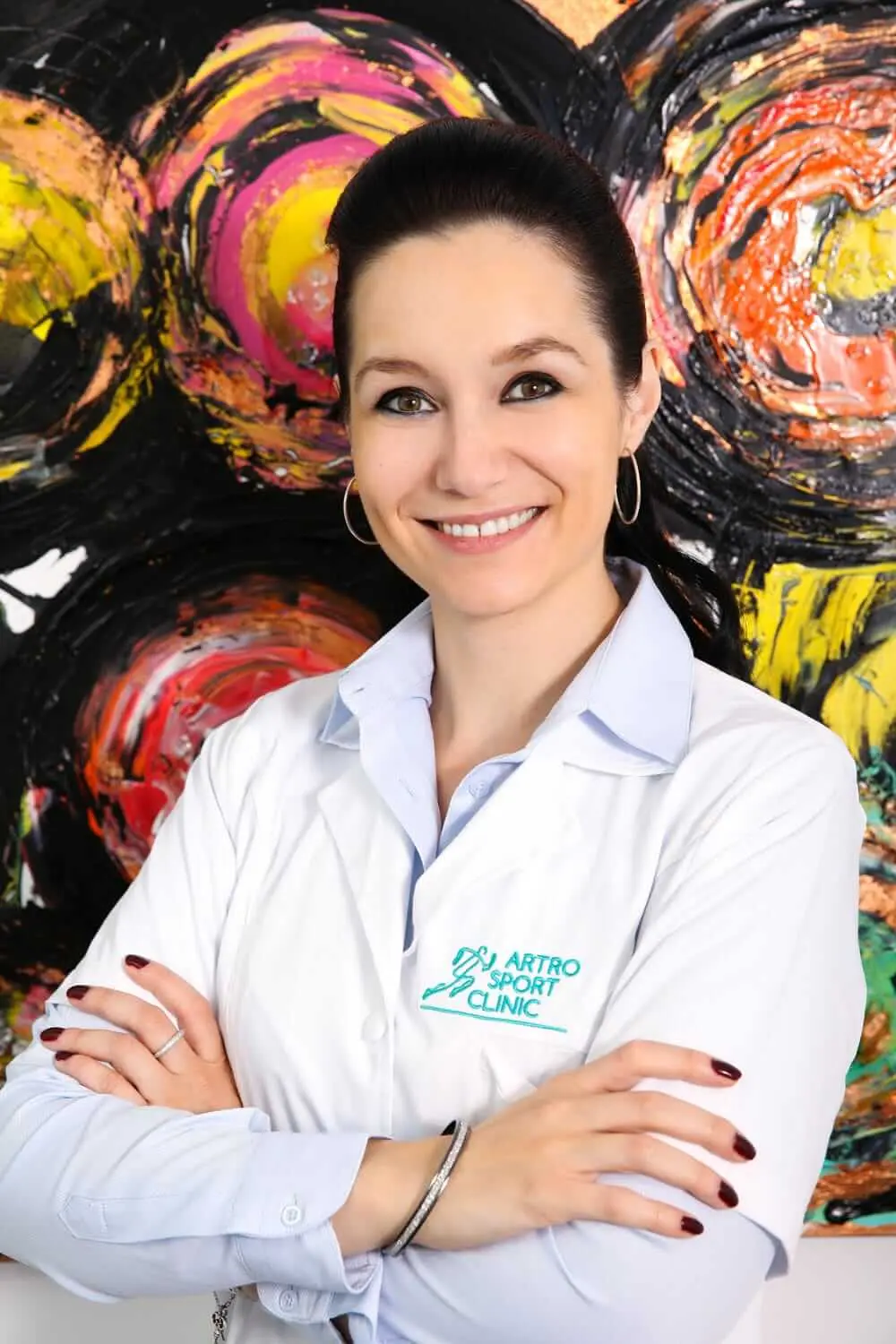
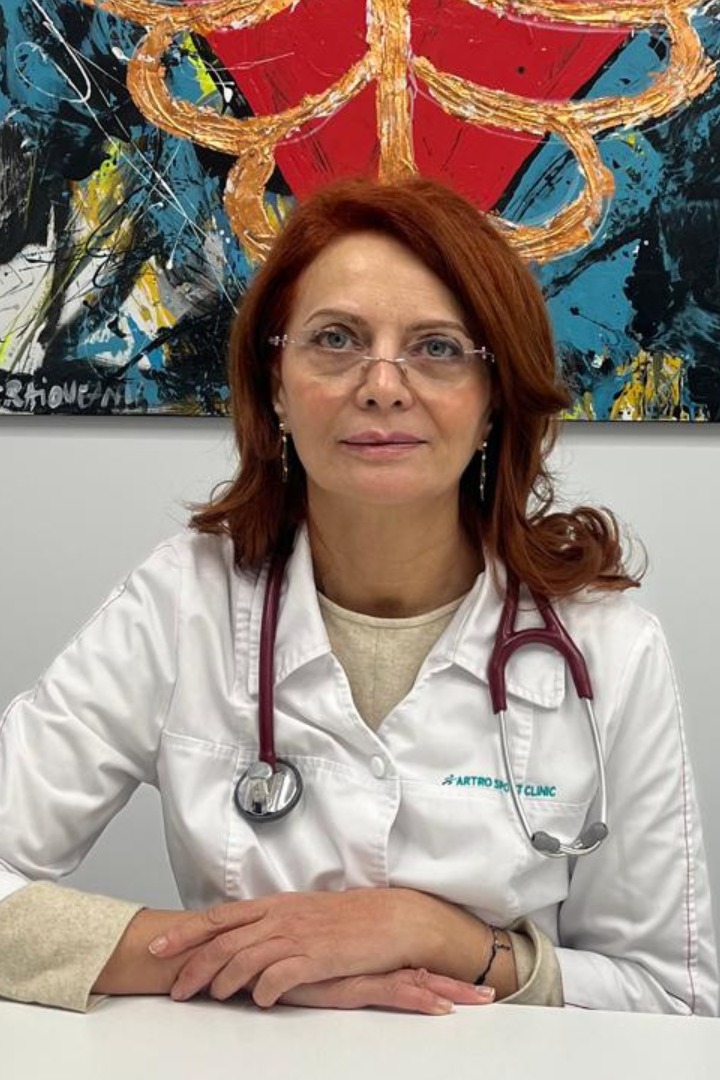
At Artro Sport Clinic Bucharest, in the cardiology speciality, you can book consultations, investigations and comprehensive tests for all cardiovascular conditions. By booking over the phone or online, patients can attend pre- and post-operative consultations, monitor their heart activity or blood pressure with ECG and blood pressure Holter monitors, and have access to consultations with some of the most renowned cardiology specialists.
Last but not least, elite athletes and any other interested patients can undergo cardiopulmonary exercise testing (VO2Max testing) at Artro Sport Clinic, a useful assessment for the complete evaluation of the cardiovascular, respiratory, muscular and metabolic systems during exercise, as well as for preventing the causes of sudden death.
The ELECTROCARDIOGRAM (abbreviated ECG or EKG) is a non-invasive, painless investigation that records the electrical activity of the heart, i.e. the way the electrical impulse is conducted through the heart. It is performed by placing electrodes or suction cups on the chest and limbs. With an electrocardiogram we can diagnose, among other things, rhythm disorders (arrhythmias), conduction disorders (heart blocks), myocardial ischaemia or myocardial infarction. The electrocardiogram is a standard investigation, required as part of a cardiology consultation, because it provides extremely important information for guiding the therapeutic approach.
Cardiac ultrasound (echocardiography) is a painless, radiation-free imaging method that uses ultrasound waves and allows us to actually see the heart on a monitor and obtain information about its structure and function. We can measure the thickness of the heart walls and the size of the chambers, and evaluate contractile function, the structure of the valves and blood flow (gradients, pressures, velocities), the presence or absence of pericardial fluid (fluid within the membrane that "envelops" the heart) or of blood clots in the heart chambers. Cardiac ultrasound therefore does not replace the electrocardiogram (ECG) but provides additional information, the two investigations complementing each other to establish a correct and complete diagnosis.
BLOOD PRESSURE HOLTER – a loosely applied name borrowed from the ECG Holter. Its correct name is ambulatory blood pressure monitoring (ABPM). It involves fitting a cuff on the arm connected to a small device that the patient wears like a necklace or a belt. The cuff is automatically programmed to inflate and measure blood pressure at preset intervals (for example every 30 minutes during the day and every 60 minutes at night). All measurements are recorded by the device, and after 24 hours the patient returns to the clinic so that the report with the recorded values can be downloaded to a computer. The advantage of ABPM is that it also measures blood pressure during the night.
The indications for fitting a BLOOD PRESSURE HOLTER / ABPM are as follows:
ECG HOLTER – continuous ECG monitoring for 24 hours (or longer) is commonly called a Holter (after the inventor of the ambulatory ECG monitoring device, the physicist Jeff Holter). It is a non-invasive, painless investigation (based on the same principle as the electrocardiogram) and involves attaching electrodes (suction cups) to the patient's chest, connected to a small device that records every heartbeat for 24 hours. The only inconvenience is that the patient may not shower or bathe while wearing the device. Otherwise, there are no restrictions on physical activity or anything else. The ECG Holter is indicated in the following situations:
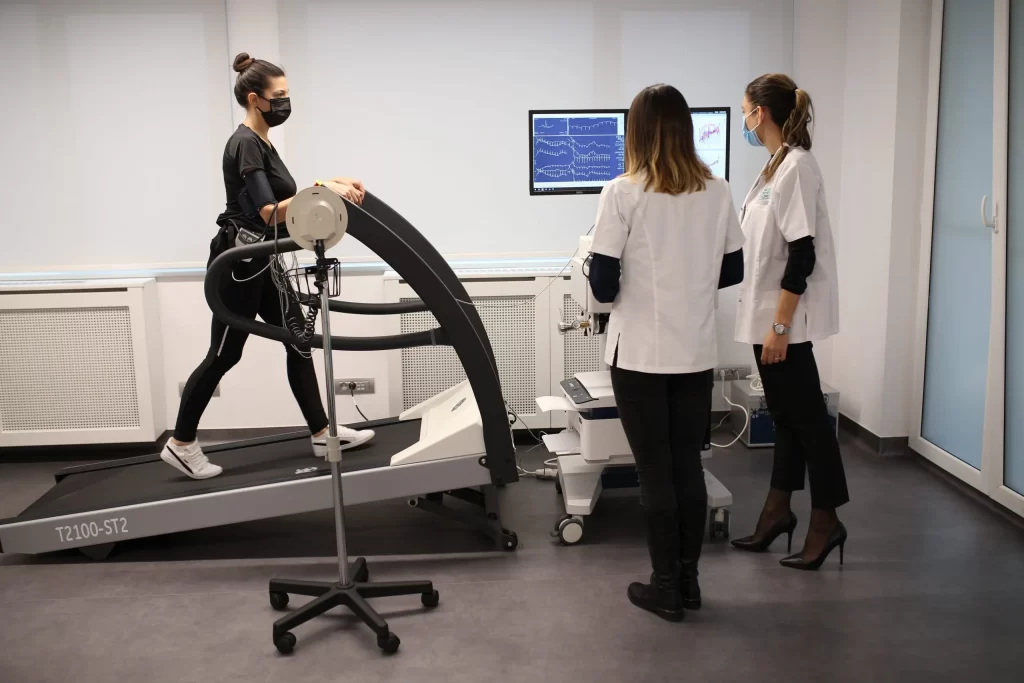
Cardiopulmonary exercise testing (CPET) is the gold standard for cardiorespiratory functional assessment. It is a valuable and essential tool that can reduce the time and costs required to diagnose conditions that limit exercise capacity. It provides information superior to that obtained at rest, allowing a better functional assessment of the cardiovascular and respiratory systems.
It is an advanced, specialised investigation that provides comprehensive information about the exercise capacity of the person being tested. This test offers a combined, parallel analysis of data that allows a complete evaluation of the cardiovascular, respiratory, muscular and metabolic systems during exercise. The main function of the cardiovascular and respiratory systems is to ensure gas exchange between the body's cells and the external environment.
It is a non-invasive procedure performed on a treadmill. The patient breathes through a mask while heart rhythm is monitored simultaneously by electrocardiogram, together with the dynamics of the respiratory gases (oxygen and carbon dioxide) during exercise, the relationship between them, and their relationship with heart rate and pulmonary ventilation.
DOPPLER ultrasound refers to the use of the Doppler effect to evaluate the direction and velocity of blood flow, as well as the velocity of cardiac tissue. Doppler ultrasound is therefore also used to evaluate blood circulation in other areas, such as the arteries and veins of the arms/legs and the neck (hence the name vascular Doppler).
The exercise ECG test involves walking on a treadmill while heart activity (electrocardiogram) and blood pressure are monitored; therefore, before the test, electrodes are placed on the chest to record the ECG and a cuff is placed on one arm to measure blood pressure. The test has an acclimatisation/warm-up phase with gentle walking, after which the speed and incline gradually increase according to the chosen test protocol.
The exercise ECG test is recommended for:
The test is stopped if:
For the test, the patient should wear comfortable clothing and footwear. Men should shave their chest hair. An interval of at least 3 hours between eating and the time of the test is recommended. It is advisable not to smoke or consume carbonated drinks, coffee or black/green tea for at least 30 minutes before the test.
The exercise ECG test is performed only on the recommendation of a cardiologist, following a resting cardiological evaluation (ECG, cardiac ultrasound).
For cardiac ultrasound or vascular Doppler examinations, the equipment used at Artro Sport Clinic Bucharest is of the latest generation, allowing cardiac function to be observed in 3D (three-dimensionally) or 4D (in real time).
Among the state-of-the-art equipment and technologies used by Artro Sport Clinic is the CPET system, a revolutionary technology with applications in cardiology and beyond. It is useful in pre- and post-operative evaluation, in establishing an appropriate cardiopulmonary rehabilitation programme and in determining the risk of sudden death. This is important not only for athletes but also for people who engage in physical activity as a hobby.
CPET technology is also very useful in preventive occupational health examinations. CPET technology reveals how the body adapts to exercise and the various conditions the patient may be suffering from, even if these have not yet manifested themselves. Depending on the test results, the cardiology specialists at Artro Sport Clinic recommend personalised types of exercise, tailored to the patient's needs.
By comparatively analysing the information provided by the 3D ultrasensor platform for postural analysis, personalised Podostasi insoles are created by computer; these correct postural deficiencies by supplying the nervous system with correct information. Designed to support the sole of the foot, Podostasi insoles help with correct postural reprogramming and with the treatment and prevention of problems arising from poor posture, which can lead to severe bodily asymmetries.
Cardiovascular conditions are among the most serious health problems and are the leading cause of death in Romania. There are many causes of heart…
VO2max, or maximal oxygen uptake, is the highest level of oxygen consumption measured during exercise of increasing intensity. This index is checked by…
The benefits of an active life, with regular exercise, are well known and have been demonstrated in numerous studies. But is there a threshold of exertion…