

Which investigations are needed to monitor heart health?
Cardiovascular conditions are among the most serious health problems and are the leading cause of death in Romania. There are many causes of heart…
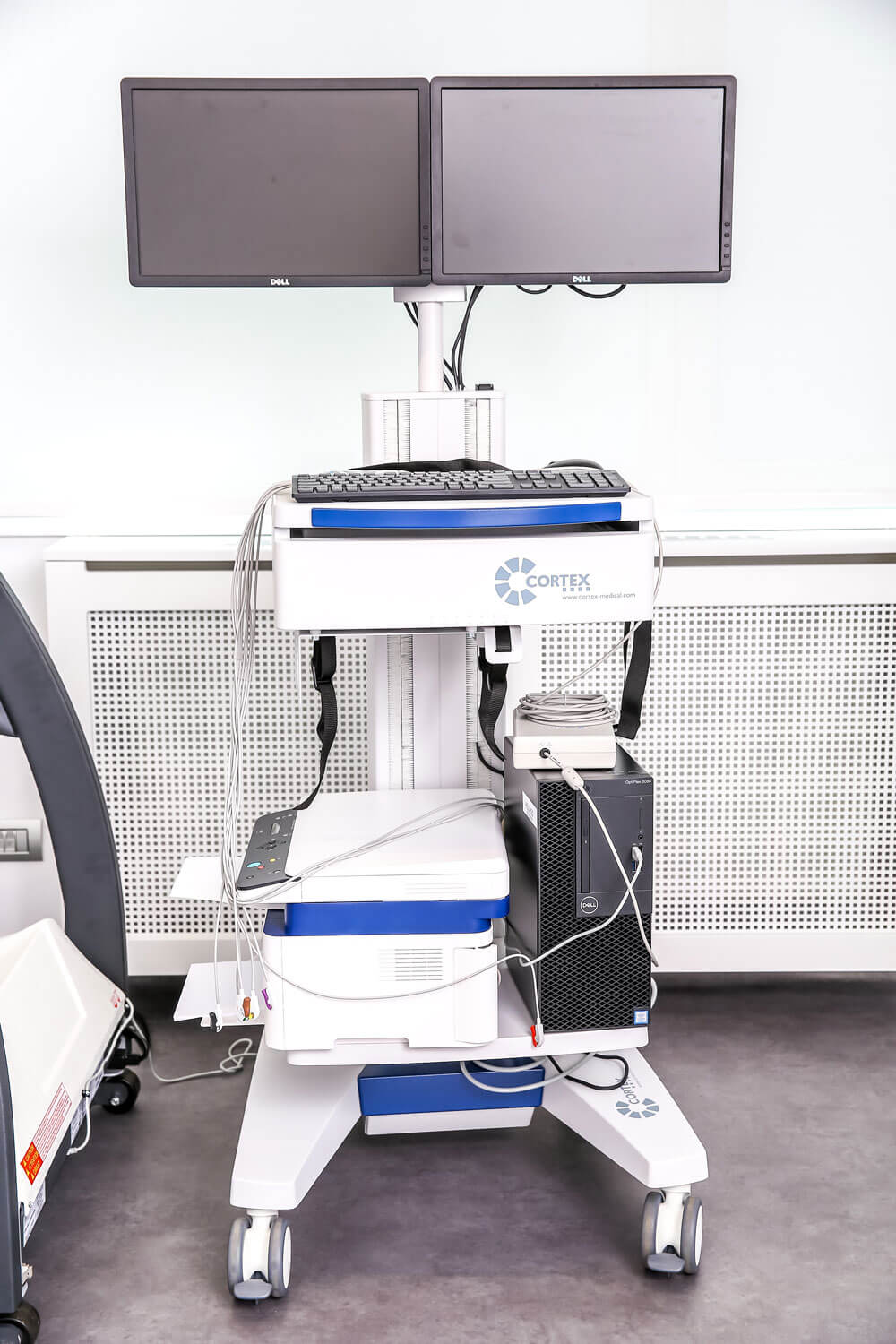 Medical equipment
The effectiveness of physical exercise in the weight-loss process is determined not only by the intensity and discipline with which it is followed, but also by identifying the point at which maximum fat burning is reached. This information is very important both for obese people who want to lose weight and for people of normal weight who want to maintain their weight and lead a healthy lifestyle.
Cortex offers a comprehensive investigation that ultimately yields a piece of information essential to the weight-loss process: the pulse value, that is, the heart rate at which physical exercise should be performed so that the body draws on its fat reserves.
The data taken into account to establish this ideal index are: the amount of oxygen we use at each stage of exercise, the volume of carbon dioxide exhaled, ventilation and heart rate. Similarly, additional parameters are calculated and displayed to estimate the substrate used during exercise (carbohydrate, fat and protein metabolism).
This “golden number” is individual and is essential to the weight-loss process.
We all know that the effective method of losing weight is to have a calorie intake lower than the energy expended through physical activity.
Diet is therefore an equally important element to observe in the weight-loss process.
In this respect, cardiometabolic testing also allows us to determine the Basal Metabolic Rate, that is, the energy we expend at rest in order to maintain our vital functions. This parameter is fundamental when drawing up a personalised diet aimed at changing body weight.
In summary, Cortex Energy Metabolism analyses two parameters that are crucial to the weight-loss process: the level of energy the body expends at rest, and the heart rate at which we need to train in order to build exercise endurance and burn the targeted substrate, namely fat.
In addition, for patients who experience shortness of breath on mild or moderate exertion, the Cortex equipment can detect a possible cardiac or respiratory pathology. This information is very important when establishing the level of exertion a patient can undertake, even when they wish to achieve significant results in the weight-loss process.
Testing a patient with Cortex Energy Metabolism is a simple, time-efficient procedure that aims to provide comprehensive metabolic testing, to identify metabolic age and the level of fat burning during sports training, in order to determine a piece of information essential to a weight-loss process in which the patient also intends to exercise: the target heart rate. Depending on body weight, the patient can take the test running on a special treadmill or at rest.
This type of testing is aimed at anyone who wants to combine exercise and diet correctly in order to achieve outstanding results in the weight-loss process. Correctly calibrated physical activity is an essential element of this process, in which many people feel discouraged by the lack of immediate results. One of the main reasons is that we spend precious time exercising but, not knowing what is right for our body, we fail to achieve the expected results.
Following this test, the patient learns how much physical exercise they need to do and at what intensity, that is, at what heart rate, so that the body enters a phase in which it burns accumulated fat, over and above what it uses for minimal daily activities.
The test takes two parameters into account:
Basal Metabolic Rate and Resting Metabolic Rate are similar concepts and represent the calorie expenditure of a person at rest in order to maintain their vital functions.
RMR/BMR testing also gives us an approximation of the substrate that would be used daily while we are at rest (how many grams of fat, protein, glucose, etc.).
The most important piece of information obtained from the test is the heart rate at which we need to exercise in order to burn fat and lose weight.
The basal metabolic rate (the one we usually use) is tested in the morning, after at least 8 hours of sleep and 12 hours of fasting. The Resting Metabolic Rate has somewhat more relaxed testing conditions, in that the test can also be performed during the day, after 4 hours of rest (physical and dietary), and, in addition to the BMR, it reflects the calorie expenditure involved in digestion and some light activities (going to the bathroom, moving around the house, etc.).


Cardiovascular conditions are among the most serious health problems and are the leading cause of death in Romania. There are many causes of heart…
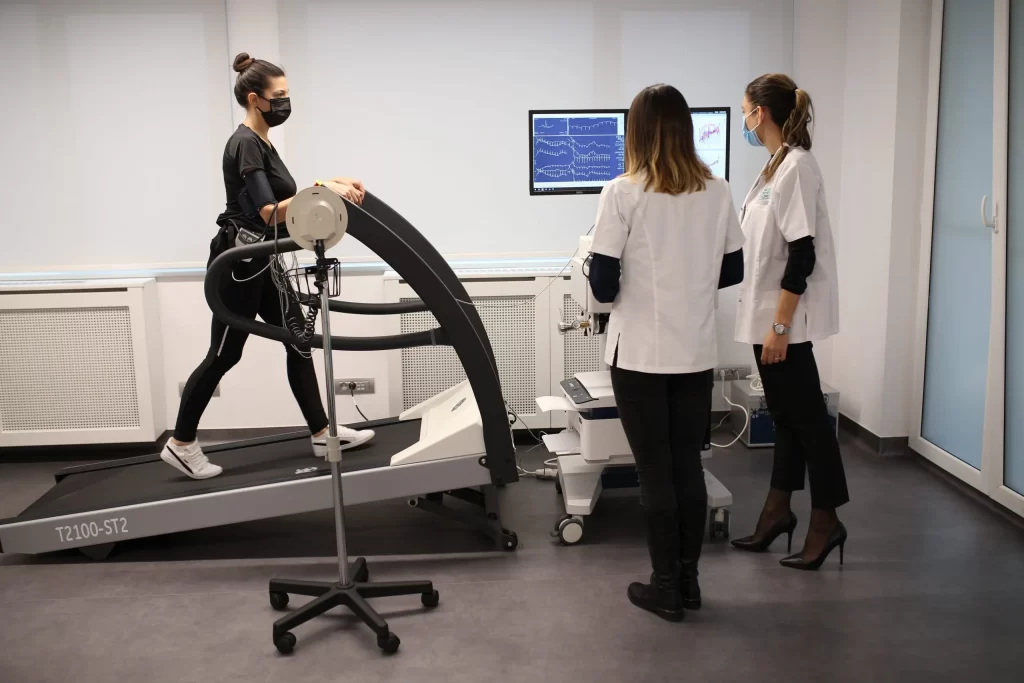
VO2max, or maximal oxygen uptake, is the highest level of oxygen consumption measured during exercise of increasing intensity. This index is checked by…

The benefits of an active life, with regular exercise, are well known and have been demonstrated in numerous studies. But is there a threshold of exertion…